|
|
 |
 |
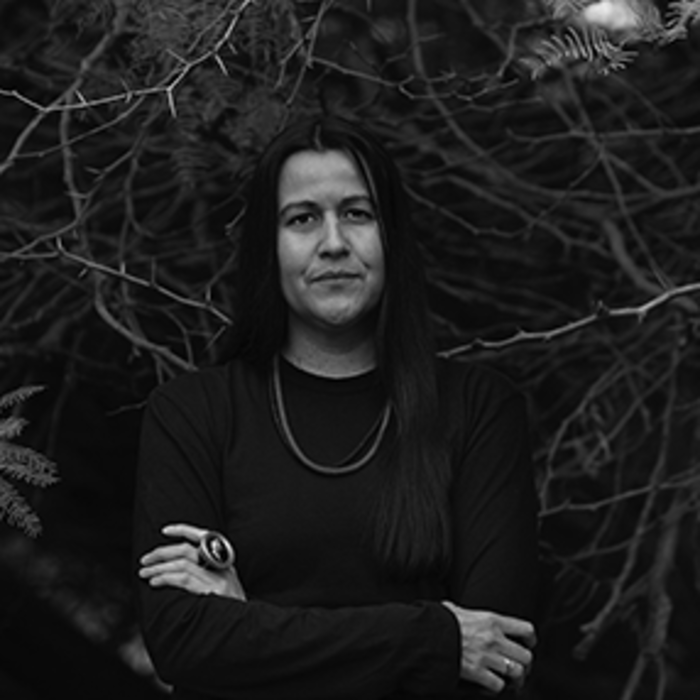
I grew up in Nogales on the border, which is a line, and knowing that if you crossed that line, something else, something different was going to happen. Different laws. Different people. Different language. Different ideas…I’ve since thought it was a lot like going to sleep and beginning to dream. You cross over into something.
|
 |
 |
 |
 |
Featured Poets |
|
 |
 |
 |
 |
Alberto Ríos
Born on the American side of the city of Nogales, Alberto Ríos received his M.F.A. in Creative Writing from the University of Arizona. He is the author of several collections of poetry, including Whispering to Fool the Wind, which received the 1981 Walt Whitman Award, and The Smallest Muscle in the Human Body, which was nominated for the National Book Award. He has taught at Arizona State University since 1982. |
 |
Norman Dubie
Born in 1945, Norman Dubie established the M.F.A. program at Arizona State University in 1975. He accepted a position there as consultant in the arts and continues to live and teach in there. |
 |
Alison Hawthorne Deming
Born in 1946, Alison Hawthorne Deming served as the Director of the University of Arizona Poetry Center from 1990 until 2000. The author of Science and Other Poems, the 1993 Walt Whitman Award winner, she is currently Associate Professor in Creative Writing at the University of Arizona. |
|
Other Arizona Poets:
Sherwin Bitsui
Jayne Cortez
Rita Maria Magdaleno
Demetria Martínez
Jane Miller
Steve Orlen
Richard Shelton
Ofelia Zepeda
|
|
 |
 |
 |
 |
Arizona Poets in Conversation |
|
 |
 |
 |
What is it about Arizona? What is it that makes it such a big part of your poetry, and what is it that keeps you here?
Alberto Ríos, Chandler, AZ
The hardest choice—and I've tried not to make it a confrontational choice with myself—has been to stay. Because I could have done all sorts of things, in all sorts of places, had a very different kind of success, I think, had I been willing to go where the action is. I think staying here has been an act of responsibility. People often ask me if I'm happy here, and that's completely the wrong question. And in fact it's one I try not to even ask myself. Because I might be happy in Paris! But is this the place I can probably make a difference and where I need to be? I think so.
Do you think place has played a role in what you write?
Jane Miller, Tucson, AZ
Yes. I've moved around a lot, from Provincetown Bay to Tomales Bay and all points in between; and topography, weather, the bustle of the marketplace, the presence of a border here between southern Arizona and Mexico—all these manifestations feed my imagination. Reality and the imagination, it seems to me, have an inexplicably successful marriage.
(From Poets on Place: Interviews & Tales from the Road, by W. T. Pfefferle) |
 |
 |
 |
 |
Literary organizations & centers |
|
 |
 |
 |
Arizona Commission on the Arts The Commission awards creative writing fellowships to Arizona poets, provides training opportunities for K-12 educators in folk arts, folklife, and oral history, and maintains the Arizona Arts Roster, a publication that offers an overview of Arizona artists and arts organizations.
Arizona State Poetry Society This membership organization has been in existence since 1965 and welcomes all poets and friends of poetry. The Center provides a guest house for visiting writers and has supported
numerous community projects, including writing workshops in Arizona State
prisons, creative writing classes and workshop for the community, and
readings and workshops in Southern Arizona high schools.
Northern Arizona Writing Project Northern Arizona Writing Project is part of a federally funded, nationwide network of teachers dedicated to improving the teaching of writing in the nation's schools. The Project brings teachers together to learn from other successful teachers how to improve the teaching of writing. Back in their own schools, writing project teachers conduct writing programs for teachers, school administrators, students, and parents.
POG POG is a collective of poets, literary critics, and practitioners of other art forms who have joined together in Tucson to offer public programming, and other related events, which will promote active appreciation of and engagement with avant-garde artistic work in a variety of media, especially poetry and multi-disciplinary art.
University of Arizona Poetry Center The Poetry Center's nationally acclaimed special collection of poetry includes nearly 60,000 items, including books, periodicals, audio and video recordings, artist-designed/limited edition books, photographs, and broadsides. The Center offers residencies and has supported numerous community projects.
|
 |
 |
 |
 |
Readings series, conferences, & literary festivals |
|
 |
 |
 |
Tucson Poetry Festival This annual festival also includes an annual Statewide Poetry Contest, Bilingual High School Poetry Contest, open microphone readings, and special performances featuring regional talent.
|
 |
 |
|
 |
 |
 |
Poetic History |
|
 |
 |
 |
|
Reversible Monuments A concise history of Mexican poetry, discussing the artistic relationships and influences shared between the United States and Mexico in the twentieth century. Read more >
|
|
Shaking the Pumpkin Attempts to translate all the elements involved with the Indian North American poetic event or ritual—pictures, body movements, sounds. Read more >
|
|
 |
 |
 |
 |
Poems about Arizona |
|
 |
 |
 |
Atlas
by Sherwin Bitsui
Tonight I draw a raven’s wing inside a circle...
Day of the Refugios
by Alberto Ríos
I was born in Nogales, Arizona...
Eden
by David Woo
Yellow-oatmeal flowers of the windmill palms...
What are the consequences of silence?
by Bhanu Kapil Rider
Red Canna, I see you...
Crossing the Colorado River into Yuma
by Simon J. Ortiz
It is almost dusk...
Earth and I Gave You Turquoise
by N. Scott Momaday
Earth I gave you turquoise...
At Grand Canyon's Edge
by David Ray
Eating the eggs for a buck eighty...
Difficult Body
by Mark Wunderlich
A story: There was a cow in the road...
|
 |
 |
 |
 |
Literary journals & small presses |
|
 |
 |
 |
Bilingual Review/Press Bilingual Review/Press publishes eight to ten titles a year. Most of their books are by or about U.S. Hispanics and most are written in English, though they do feature bilingual and Spanish-only titles as well.
CHAX Press In addition to publishing poetry books, they also sponsor poetry readings, writers- and artists-in-residences, exhibitions, and other events.
Cue: A Journal of Prose Poetry The University of Arizona's literary journal.
Hayden's Ferry Review Arizona State University's award-winning national literary and art magazine.
Sonora Review The oldest student-run literary journal in the country. Each issue is put together solely by graduate students in the Creative Writing Department at the University of Arizona.
Spork Magazine A Tucson-based quarterly magazine of poetry, fiction, essays, and artwork.
University of Arizona Press The press publishes general interest books on Arizona and the Southwest borderlands including two series in literature: Sun Tracks: An American Indian Literary Series and Camino del Sol: A Chicana/o Literary Series
|
 |
 |
 |
 |
Writing programs & colonies |
|
 |
 |
 |
Arizona State University Consistently ranked as one of the top creative writing programs in the nation by US News and World Report, the Creative Writing Program at Arizona State University combines the strengths of two departments: English, in the College of Liberal Arts and Sciences, and Theatre, in the College of Fine Arts.
Northern Arizona University Offers an M.A. with an emphasis in Creative Writing. The University Writing Program includes the Writing Workshop, in which tutors hold over 1,700 individual conferences with students at all levels and from all disciplines during each academic year.
Phoenix College The Creative Writing Program is "especially suited to non-traditional students, including adults with established careers in other fields, minority writers, and seniors."
University of Arizona Offers both undergraduate major and an M.F.A. in Creative Writing. Arizona encourages you to shape your own study, in a setting of required workshops and seminars, toward the completion of a publishable manuscript.
|
 |
 |
|
|