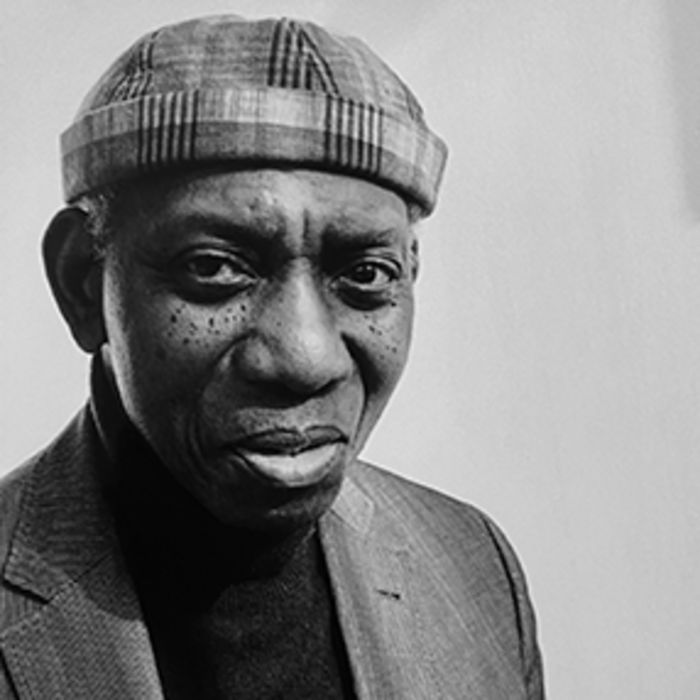
Langston Hughes
James Mercer Langston Hughes was born on February 1, 1901, in Joplin, Missouri. Hughes’s birth year was revised from 1902 to 1901 after new research from 2018 uncovered that he had been born a year earlier. His parents, James Nathaniel Hughes and Carrie Langston Hughes, divorced when he was a young child, and his father moved to Mexico. He was raised by his maternal grandmother, Mary Sampson Patterson Leary Langston, who was nearly seventy when Hughes was born, until he was thirteen. He then moved to Lincoln, Illinois, to live with his mother and her husband, before the family eventually settled in Cleveland. It was in Lincoln that Hughes began writing poetry.
After graduating from high school, he spent a year in Mexico followed by a year at Columbia University. During this time, he worked as an assistant cook, a launderer, and a busboy. He also traveled to Africa and Europe working as a seaman. In November 1924, he moved to Washington, D.C. Hughes’s first book of poetry, The Weary Blues, was published by Alfred A. Knopf in 1926 with an introduction by Harlem Renaissance arts patron Carl Van Vechten. Criticism of the book from the time varied, with some praising the arrival of a significant new voice in poetry, while others dismissed Hughes’s debut collection. He finished his college education at Lincoln University in Pennsylvania three years later. In 1930 his first novel, Not Without Laughter (Alfred A. Knopf, 1930), won the Harmon Foundation’s gold medal for literature.
Hughes, who cited Paul Laurence Dunbar, Carl Sandburg, and Walt Whitman as his primary influences, is particularly known for his insightful portrayals of Black life in America from the 1920s to the 1960s. He wrote novels, short stories, plays, and poetry, and is also known for his engagement with the world of jazz and the influence it had on his writing, as in his book-length poem Montage of a Dream Deferred (Holt, 1951). His life and work were enormously important in shaping the artistic contributions of the Harlem Renaissance of the 1920s. Unlike other notable Black poets of the period, such as Claude McKay, Jean Toomer, and Countee Cullen, Hughes refused to differentiate between his personal experience and the common experience of Black America. He wanted to tell the stories of his people in ways that reflected their actual culture, including their love of music, laughter, and language, alongside their suffering.
The critic Donald B. Gibson noted in the introduction to Modern Black Poets: A Collection of Critical Essays (Prentice Hall, 1973) that Hughes
differed from most of his predecessors among black poets… in that he addressed his poetry to the people, specifically to black people. During the twenties when most American poets were turning inward, writing obscure and esoteric poetry to an ever decreasing audience of readers, Hughes was turning outward, using language and themes, attitudes and ideas familiar to anyone who had the ability simply to read... Until the time of his death, he spread his message humorously—though always seriously—to audiences throughout the country, having read his poetry to more people (possibly) than any other American poet.
In addition to leaving us a large body of poetic work, Hughes wrote eleven plays and countless works of prose, including the well-known “Simple” books: Simple’s Uncle Sam (Hill and Wang, 1965); Simple Stakes a Claim (Rinehart, 1957); Simple Takes a Wife (Simon & Schuster, 1953); Simple Speaks His Mind (Simon & Schuster, 1950). He coedited the The Poetry of the Negro, 1746–1949 (Doubleday & Co., Inc., 1949) with Arna Bontemps, edited The Book of Negro Folklore (Dodd, Mead & Company, 1958), and wrote an acclaimed autobiography, The Big Sea (Alfred A. Knopf, 1940). Hughes also cowrote the play Mule Bone (HarperCollins, 1991) with Zora Neale Hurston.
Langston Hughes died of complications from prostate cancer on May 22, 1967, in New York City. In his memory, his residence at 20 East 127th Street in Harlem has been given landmark status by the New York City Preservation Commission, and East 127th Street has been renamed “Langston Hughes Place.”