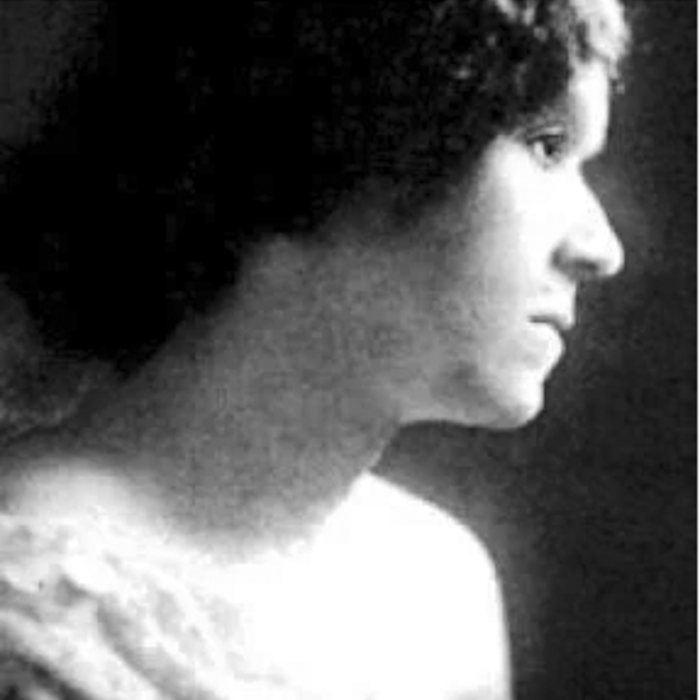
Jean Toomer
Jean Toomer was born on December 26, 1894, in Washington, D.C., the son of Nathan Toomer, a Georgian farmer, and Nina Pinchback. His grandfather, Pinckney Benton Stewart Pinchback, was the first African American governor in the United States, serving in Louisiana during Reconstruction from 1872–73. Toomer began college at the University of Wisconsin in 1914, but transferred to the College of the City of New York and studied there until 1917.
Toomer spent the next four years writing and publishing poetry and prose in Broom, The Liberator, The Little Review, and other journals. He actively participated in literary society and was acquainted with such prominent figures as the critic Kenneth Burke, the photographer Alfred Steiglitz, and the poet Hart Crane.
In 1921, Toomer took a teaching job in Georgia and remained there for four months. The trip represented his journey back to his Southern roots. His experience inspired his book Cane (Boni & Liveright, 1923), which describes the Georgian people and landscape and is regarded as an influential work in Modernist literature. About the book, Rudolph P. Byrd and Henry Louis Gates Jr. wrote,
Cane, a compelling, haunting amalgam of fiction, poetry, and drama unified formally and thematically and replete with leitmotifs, would elevate Toomer, virtually overnight, to the status of a canonical writer in two branches of American modernism: the writers and critics who compose the New Critics and the “Lost Generation” and those who compose the New Negro movement or the Harlem Renaissance.
In the early 1920s, Toomer became interested in Unitism, a religion founded by the Armenian guru George Ivanovich Gurdjieff. The doctrine taught unity, transcendence, and mastery of self through yoga, all of which appealed to Toomer. After studying with Gurdjieff in France, Toomer began to preach his teachings in Harlem and to offer workshops in other parts of the country. In 1936, Toomer moved to Doylestown, Pennsylvania and eventually distanced himself from Gurdjieff, taking up, instead, a new interest in Quakerism.
Toomer, devoted to seeking spiritual enlightenment, also questioned the boundaries of race. His longing for a national identity free from divisions by race or class, as illustrated by his Whitmanesque long poem “Blue Meridian.” About his quest, Elizabeth Alexander wrote, in her poem, “Toomer”: “I did not wish to ‘rise above’ / or ‘move beyond’ my race. I wished / to contemplate who I was beyond / my body, this container of flesh.”
Toomer died after numerous ailments in Doylestown, Pennsylvania, on March 30, 1967.