Archibald MacLeish
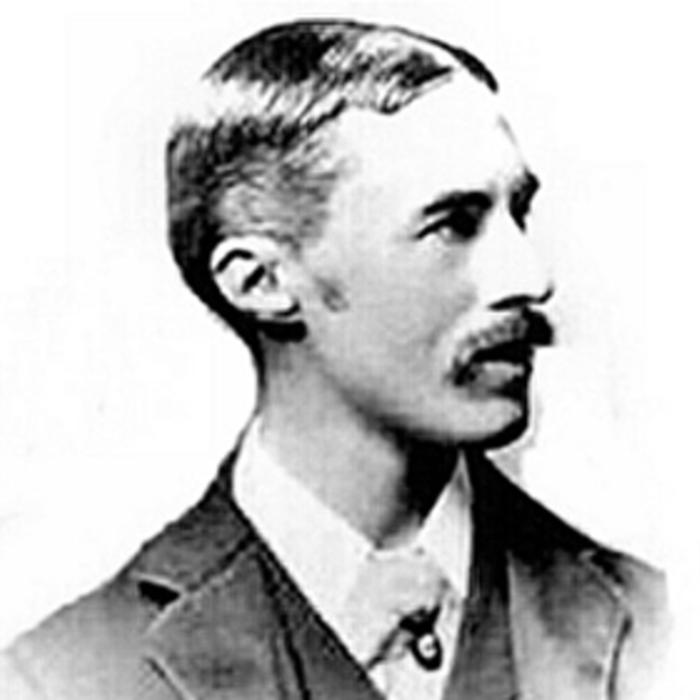
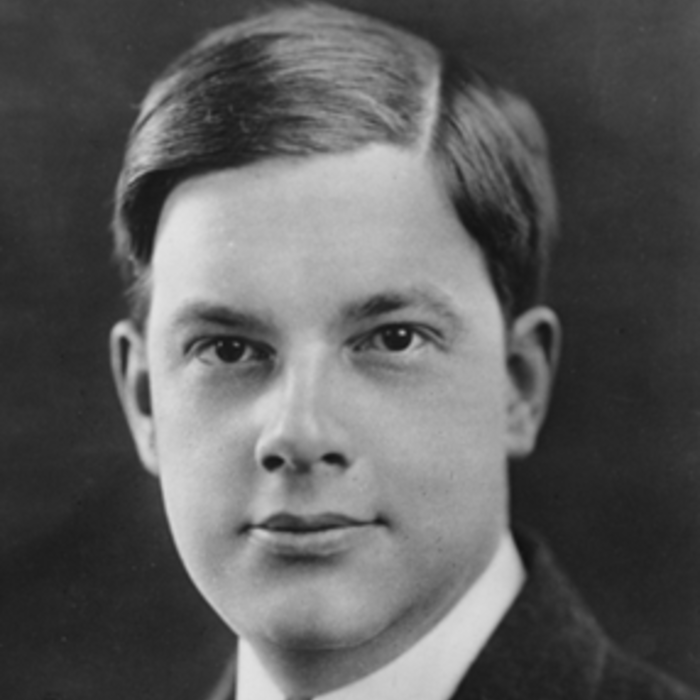
Archibald MacLeish was born in Glencoe, Illinois, on May 7, 1892. First educated at Hotchkiss School, MacLeish later studied at Yale and Harvard Law School, where he was first in his class. Although he focused his studies on law, he also began writing poetry during this time.
At the onset of World War I, MacLeish volunteered as an ambulance driver, and later became a captain of field artillery. Upon returning home, he worked in Boston as a lawyer but found that the position distracted him from his poetry. He resigned in 1923, on the day that he was promoted to partner in the firm. MacLeish then moved his family to France and began to focus on writing. There he was to befriend fellow writers such as Kay Boyle, Ernest Hemingway, and Ezra Pound. During the next four years, MacLeish published four books of poetry, including The Happy Marriage and Other Poems (Houghton Mifflin, 1924) and The Pot of Earth (Houghton Mifflin, 1925). In 1928, MacLeish returned to the U.S., where he began research for his epic poem Conquistador by traveling the steps and mule-ride of Hernán Cortés’s army through Mexico. MacLeish won the Pulitzer Prize for this work in 1932.
From 1930 to 1938, MacLeish worked as an editor at Fortune magazine. During that period, he wrote two radio dramas to increase patriotism and warn Americans against fascism. MacLeish also displayed increasing passion for this cause in his poems and articles. In 1939, President Franklin D. Roosevelt persuaded him to accept an appointment as Librarian of Congress, a position he kept for five years. MacLeish thoroughly reorganized the Library’s administrative offices and established its series of poetry readings. At the same time, MacLeish served as director of the War Department’s Office of Facts and Figures and assistant director of the Office of War Information, specializing in propaganda. In 1944, he was appointed assistant secretary of state for cultural affairs. After World War II, MacLeish became the first American member of the governing body of UNESCO, and chaired the first UNESCO conference in Paris.
In 1949, MacLeish retired from his political activism to become Harvard’s Boylston Professor of Rhetoric and Oratory, a position he held until 1962. From 1963 to 1967, he was Simpson Lecturer at Amherst College. MacLeish continued to write poetry, criticism, and stage and screenplays, to great acclaim. His Collected Poems, 1917–1952 (Houghton Mifflin, 1952), won him a second Pulitzer Prize, as well as the National Book Award and the Bollingen Prize. J.B. (Houghton Mifflin, 1958), a verse play based on the book of Job, earned him a third Pulitzer, this time for drama. In 1965, MacLeish received an Academy Award for his work on the screenplay of The Eleanor Roosevelt Story. He served as a Chancellor of the Academy of American Poets from 1946 to 1949.
Archibald MacLeish died on April 20, 1982, in Boston.