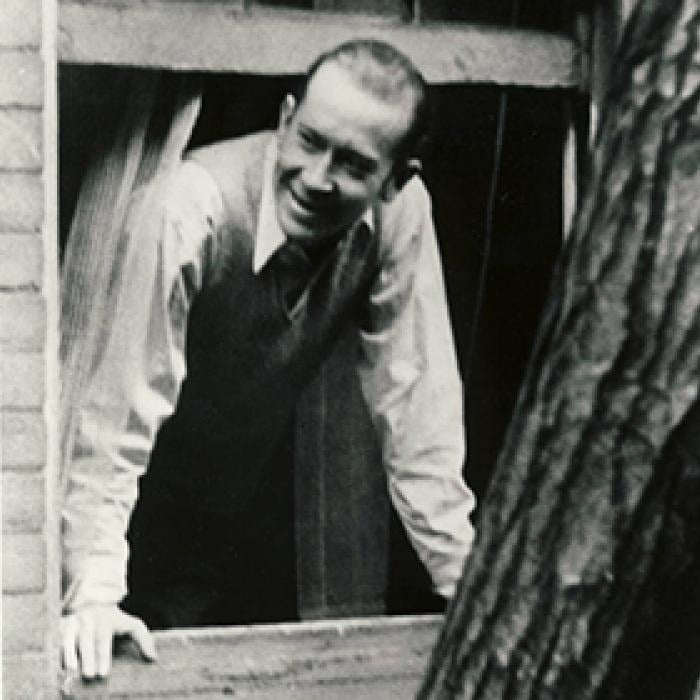
Hart Crane
Harold Hart Crane was born on July 21, 1899, in Garrettsville, Ohio, and began writing verse in his early teenage years. Though he never attended college, Crane read regularly on his own, digesting the works of the Elizabethan dramatists and poets William Shakespeare, Christopher Marlowe, John Donne and the nineteenth-century French poets Charles Vildrac, Jules Laforgue, and Arthur Rimbaud. His father, a candy manufacturer, attempted to dissuade him from a career in poetry, but Crane was determined to follow his passion to write.
Living in New York City, he associated with many important figures in literature of the time, including Allen Tate, the novelist and short story writer Katherine Anne Porter, E. E. Cummings, and Jean Toomer, but his heavy drinking and chronic instability frustrated any attempts at lasting friendship. An admirer of T. S. Eliot, Crane combined the influences of European literature and traditional versification with a particularly American sensibility derived from Walt Whitman.
His major work, the book-length poem, The Bridge, expresses in ecstatic terms a vision of the historical and spiritual significance of America. Like Eliot, Crane used the landscape of the modern, industrialized city to create a powerful new symbolic literature.
Hart Crane died by suicide on April 27, 1932, at the age of thirty-two, while sailing back to New York from Mexico.