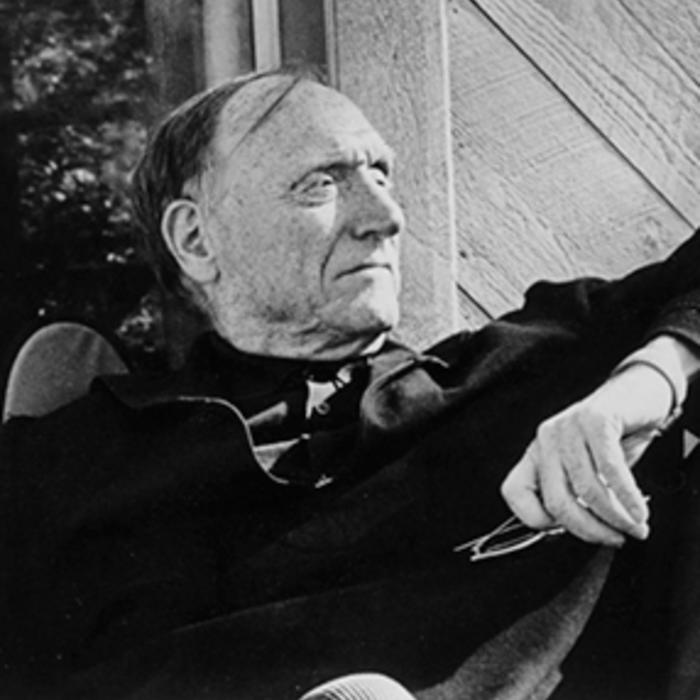
Allen Tate
On November 19, 1899, John Orley Allen Tate was born in Winchester, Clarke County, Kentucky. He attended Vanderbilt University and graduated magna cum laude in 1922. He married the novelist Caroline Gordon in 1924.
Tate was a founding editor of The Fugitive, a magazine of verse published out of Nashville, Tennessee, from 1922 to 1925. The magazine was named for the Fugitives, a group of Southern poets which included Tate and several of his colleagues from Vanderbilt, including John Crowe Ransom, Robert Penn Warren, Donald Davidson, and Merrill Moore. The Fugitives were practitioners and defenders of formal technique in poetry and were preoccupied with the defending the traditional values of the agrarian South against the effects of urban industrialization.
Tate published his first book of poems, Mr. Pope and Other Poems (Minton, Balch & Company), in 1928. His early work reflects the influence by Baudelaire, Corbière, Edwin Arlington Robinson, and Ezra Pound. In 1922, Tate read T. S. Eliot and discovered a kindred spirit. He admired Eliot's adherence to literary tradition and found Eliot's social and political concerns were similar to his own. Tate taught at several colleges and universities and was editor of The Sewanee Review from 1944 to 1947. He had a great influence not only as a critic but as a mentor to such younger poets as Robert Lowell, John Berryman, and Randall Jarrell. From 1951 until his retirement he was a professor of English at the University of Minnesota. He died on February 9, 1979.