Academy of American Poets
View Cart | Log In 
Subscribe | More Info 
Find a Poet or Poem
Advanced Search >
FURTHER READING
Related Prose
Aaron Copland: Capturing the Language of Emily Dickinson
Groundbreaking Book: The Complete Poems 1850-1870 by Emily Dickinson (1960)
Isaac Watts & Emily Dickinson: Inherited Meter
Poetry Landmark: Emily Dickinson's Home in Amherst, MA
Elegy and Eros: Configuring Grief
by David Baker
Forms of Reticence
by Saskia Hamilton
Making a Space for Aphorism: Exploring the Intersection between Aphorism and Poetry
by Sharon Dolin
Metaphor in Literature
by Matthew Zapruder
My Favorite Poet: Emily Dickinson
by Michael Ryan
Poems Kids Like
Twisting and Turning
by Maureen N. McLane
Victorian Treasure: Emily Dickinson's Herbarium
by Judith Farr
Video: Blaney Lecture: The Whispered Rush, Telepathy of Archives
by Susan Howe
Easy Poet Costume Ideas
Related Poets
Robert Browning
Elizabeth Barrett Browning
John Keats
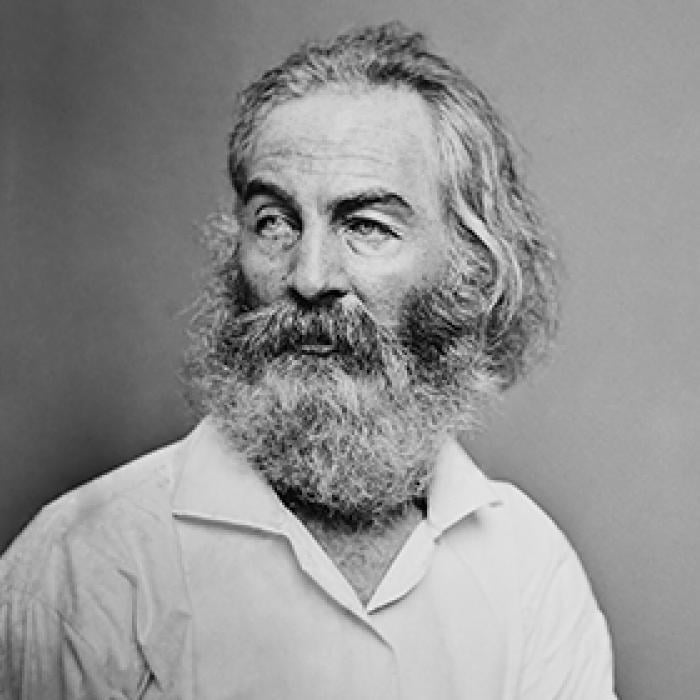
Walt Whitman
Related Pages
Poems
Poets.org Guide to Emily Dickinson's Collected Poems
A Close Reading of "I Cannot Live With You"
Emily Dickinson Discussion Questions
Emily Dickinson: Suggested Reading
External Links
Emily Dickinson
The Today in Literature website features biographical stories, events, resources, and links
Meet the Poet: Emily Dickinson
Alfred Habegger, author of My Wars Are Laid Away in Books: The Life of Emily Dickinson, discusses the poet's life on WGBH.
Reckless Genius
Galway Kinnell pays tribute to Emily Dickinson, at Salon.com.
Susan Howe on Dickinson
"She built a new poetic form from her fractured sense of being eternally on intellectual borders ..."
Sponsor a Poet Page | Add to Notebook | Email to Friend | Print
Emily Dickinson
Photo courtesy of Amherst College Library

Emily Dickinson

In 1830, Emily Dickinson was born in Amherst, Massachusetts. She attended Mount Holyoke Female Seminary in South Hadley, but only for one year. Throughout her life, she seldom left her house and visitors were few. The people with whom she did come in contact, however, had an enormous impact on her poetry. She was particularly stirred by the Reverend Charles Wadsworth, whom she met on a trip to Philadelphia. He left for the West Coast shortly after a visit to her home in 1860, and some critics believe his departure gave rise to the heartsick flow of verse from Dickinson in the years that followed. While it is certain that he was an important figure in her life, it is not certain that this was in the capacity of romantic love—she called him "my closest earthly friend." Other possibilities for the unrequited love in Dickinson’s poems include Otis P. Lord, a Massachusetts Supreme Court Judge, and Samuel Bowles, editor of the Springfield Republican.

By the 1860s, Dickinson lived in almost total physical isolation from the outside world, but actively maintained many correspondences and read widely. She spent a great deal of this time with her family. Her father, Edward Dickinson, was actively involved in state and national politics, serving in Congress for one term. Her brother Austin attended law school and became an attorney, and lived next door with his wife Susan Gilbert. Dickinson’s younger sister Lavinia also lived at home for her entire life in similar isolation. Lavinia and Austin were not only family, but intellectual companions during Dickinson’s lifetime.

Dickinson's poetry reflects her loneliness and the speakers of her poems generally live in a state of want. Her poems are also marked by the intimate recollection of inspirational moments which are decidedly life-giving and suggest the possibility of happiness. Her work was heavily influenced by the Metaphysical poets of seventeenth-century England, as well as her reading of the Book of Revelation and her upbringing in a Puritan New England town which encouraged a Calvinist, orthodox, and conservative approach to Christianity.

She admired the poetry of Robert and Elizabeth Barrett Browning, as well as John Keats. Though she was dissuaded from reading the verse of her contemporary Walt Whitman by rumor of its disgracefulness, the two poets are now connected by the distinguished place they hold as the founders of a uniquely American poetic voice. While Dickinson was extremely prolific as a poet and regularly enclosed poems in letters to friends, she was not publicly recognized during her lifetime. The first volume of her work was published posthumously in 1890 and the last in 1955. She died in Amherst in 1886.

Upon her death, Dickinson's family discovered 40 handbound volumes of nearly 1800 of her poems, or "fascicles" as they are sometimes called. These booklets were made by folding and sewing five or six sheets of stationery paper and copying what seem to be final versions of poems in an order that many critics believe to be more than chronological. The handwritten poems show a variety of dash-like marks of various sizes and directions (some are even vertical). The poems were initially unbound and published according to the aesthetics of her many early editors, removing her unusual and varied dashes and replacing them with traditional punctuation. The current standard version replaces her dashes with a standard "n-dash," which is a closer typographical approximation of her writing. Furthermore, the original order of the works was not restored until 1981, when Ralph W. Franklin used the physical evidence of the paper itself to restore her order, relying on smudge marks, needle punctures and other clues to reassemble the packets. Since then, many critics have argued for thematic unity in these small collections, believing the ordering of the poems to be more than chronological or convenient. The Manuscript Books of Emily Dickinson (Belknap Press, 1981) remains the only volume that keeps the order intact.
A Selected Bibliography

Poetry


Poems by Emily Dickinson (1890)
Poems: Second Series (1891)
Poems: Third Series (1896)
The Single Hound: Poems of a Lifetime (1914)
The Complete Poems of Emily Dickinson (1924)
Further Poems of Emily Dickinson: Withheld from Publication by Her Sister Lavinia (1929) Unpublished Poems of Emily Dickinson (1935)
Bolts of Melody: New Poems of Emily Dickinson (1945)
The Complete Poems of Emily Dickinson (1960)
Final Harvest: Emily Dickinson's Poems (1962)

Prose

Letters of Emily Dickinson (1894)
Emily Dickinson Face to Face: Unpublished Letters with Notes and Reminisces (1932)


Multimedia

From the Image Archive

Poems by
Emily Dickinson

A Bird came down the Walk (328)
A Drop fell on the Apple Tree (794)
A lane of Yellow led the eye (1650)
A Man may make a Remark (952)
Because I could not stop for Death (712)
Besides the Autumn poets sing (131)
Color - Caste - Denomination - (970)
Come Slowly—Eden (211)
Dear March - Come in - (1320)
Fame is a fickle food (1659)
Hope is the thing with feathers (254)
I cannot live with You (640)
I could suffice for Him, I knew (643)
I felt a Funeral, in my Brain (280)
I heard a Fly buzz (465)
I like to see it lap the Miles (43)
I measure every Grief I meet (561)
I taste a liquor never brewed (214)
I tie my Hat—I crease my Shawl (443)
I'm Nobody! Who are you? (260)
It sifts from Leaden Sieves - (311)
It was not Death, for I stood up (510)
It's all I have to bring today (26)
Knows how to forget! (433)
Like Brooms of Steel (1252)
Luck is not chance (1350)
My life closed twice before its close (96)
One day is there of the series
One Sister have I in our house (14)
Safe in their Alabaster Chambers (216)
The Outlet (162)
The Savior must have been a docile Gentleman (1487)
The Soul selects her own Society (303)
The Soul unto itself (683)
There is no frigate like a book (1263)
There's a certain Slant of light (258)
To make a prairie (1755)
Two Butterflies went out at Noon— (533)
We never know how high we are (1176)
Wild Nights – Wild Nights! (249)
Winter is good - his Hoar Delights (1316)

Prose by
Emily Dickinson

Letter to Susan Huntington Dickinson

Want more poetry?
Sign up to receive our
monthly update emails.

The Poets.org Store

Emily Dickinson Necklace

Emily Dickinson Doll


Support independent booksellers
Make your purchase online through IndieBound or find a local bookstore on the National Poetry Map.


Larger TypeLarger Type | Home | Help | Contact Us | Privacy Policy Copyright © 1997 - 2013 by Academy of American Poets.