Kenneth Rexroth
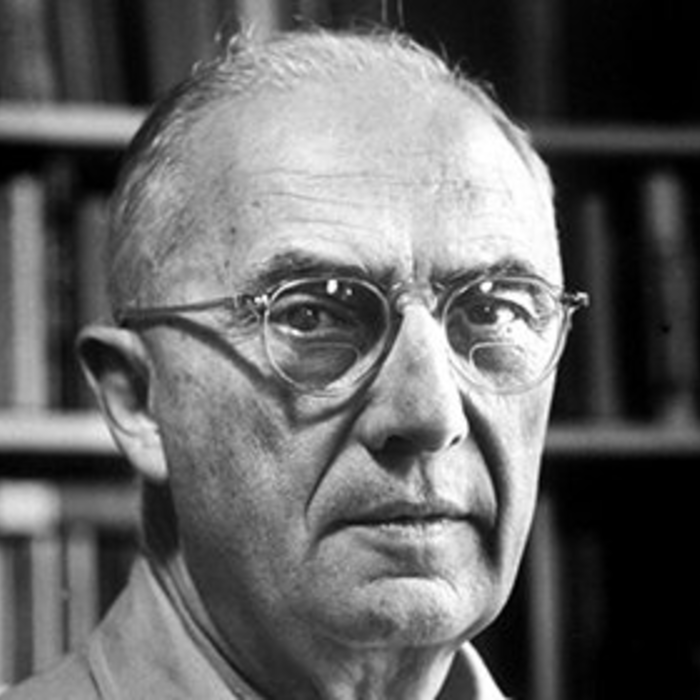
Kenneth Charles Marion Rexroth was born on December 22, 1905, in South Bend, Indiana. Orphaned at fourteen, Rexroth moved to live with his aunt in Chicago, where he was expelled from high school. He began publishing in magazines at the age of fifteen. As a youth, he supported himself with odd jobs—as a soda jerk, clerk, wrestler, and reporter. He hitchhiked around the country, visited Europe, and backpacked in the wilderness, reading and frequenting literary salons and lecture halls, in addition to teaching himself several languages.
Rexroth and his first wife, the painter Andrée Shafer, moved to San Francisco in 1927. There, he published his first poems in a variety of small magazines, while also pursuing an interest in Eastern mysticism and leftist politics. He kept company with like-minded left-wing poets, such as George Oppen and Louis Zukovsky and, with them, aimed to rescue poetry from its supposed downslide into formalist sentimentality. They organized clubs to support struggling writers and artists.
By the early 1930s, through a correspondence with Ezra Pound, Rexroth was introduced to James Laughlin of New Directions press, who included Rexroth’s poems in the second volume of Laughlin’s pivotal annual, New Directions in Poetry and Prose, in 1937. Rexroth’s first collection, In What Hour (Macmillan, 1940), articulated the poet’s ecological sensitivities along with his political convictions. In 1944, another collection, The Phoenix and the Tortoise (New Directions), continued his exploration of the natural and the erotic, presented his pacifist stance on World War II, incorporated references to the work of classical poets from the East and the West, and expanded his tonal range with poems touching on world religions and the history of philosophy. A consummate activist, during the war, Rexroth aided Japanese Americans in escaping from West Coast internment camps.
By the late 1940s, Rexroth was laying the groundwork for what would become the San Francisco Renaissance. He promoted the poetry of Lawrence Ferlinghetti, Philip Whalen, Denise Levertov, William Everson, LeRoi Jones (Amiri Baraka), and many others on the radio station KPFA. He organized a weekly salon, called “the Fridays,” and invited friends and other poets to come and share their philosophical and poetic theories. Among those in attendance were Robert Duncan, Richard Eberhart, and, eventually, Allen Ginsberg, Gary Snyder, and other Beat poets.
Rexroth organized and emceed the legendary Six Gallery reading on October 7, 1955, at which Ginsberg introduced the world to “Howl.” Rexroth’s work was composed with attention to musical traditions, and he performed his poems with jazz musicians. Nonetheless, Rexroth was not wholly supportive of the dramatic rise in popularity of the so-called “Beat Generation,” and he was distinctly displeased when he became known as “the father of the Beats.”
By the 1960s, Rexroth’s appeal reached far beyond San Francisco. He was devoted to world literature and brought public attention to poetry in translation through his “Classics Revisited” column in the Saturday Review and through his anthologies, One Hundred Poems from the Chinese (New Directions, 1971) and One Hundred Poems from the Japanese (New Directions, 1955).
In 1964, Rexroth received an award from the National Institute of Arts and Letters. He went on to publish collections of his poems in 1967 and 1968, respectively. Rexroth moved to Santa Barbara in 1968. He taught at the University of California, Santa Barbara until 1974, when he was awarded a Fulbright scholarship to study in Japan. In 1975, he received the Copernicus Award from the Academy of American Poets in recognition of a poet’s lifetime work and contribution to poetry as a cultural force. In 1977, he received a fellowship from the National Endowment for the Arts.
A lifelong iconoclast, Rexroth railed against the dominance of the East Coast “literary establishment” and the bourgeois taste that, he believed, was corrupting American poetry. While he refused to consider himself a Beat poet, his influence as champion of anti-establishment literature paved the way for others to write poems of social consciousness and passionate political engagement. His greatest contribution to American poetry may have been in opening it up to Asian influences through his mystical, erotically-charged poetry and translations.
Kenneth Rexroth died in 1982 and is buried in Santa Barbara on a cliff above the sea.