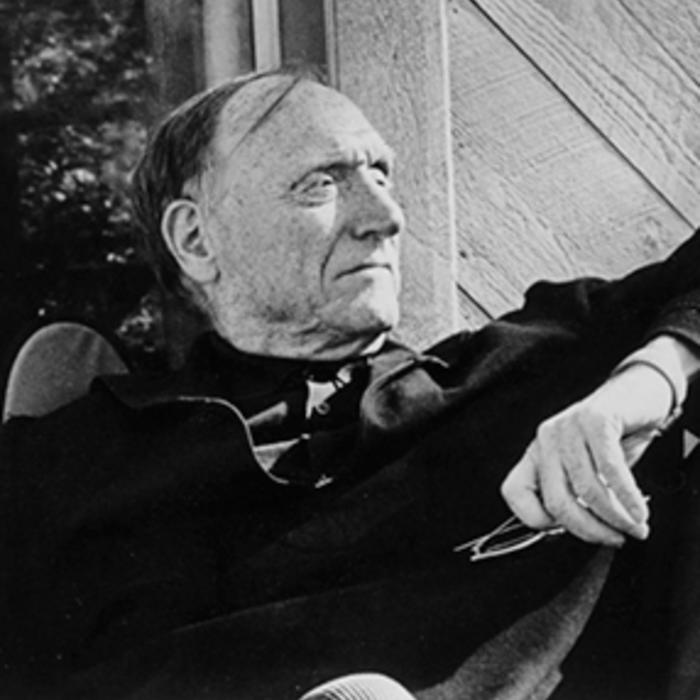
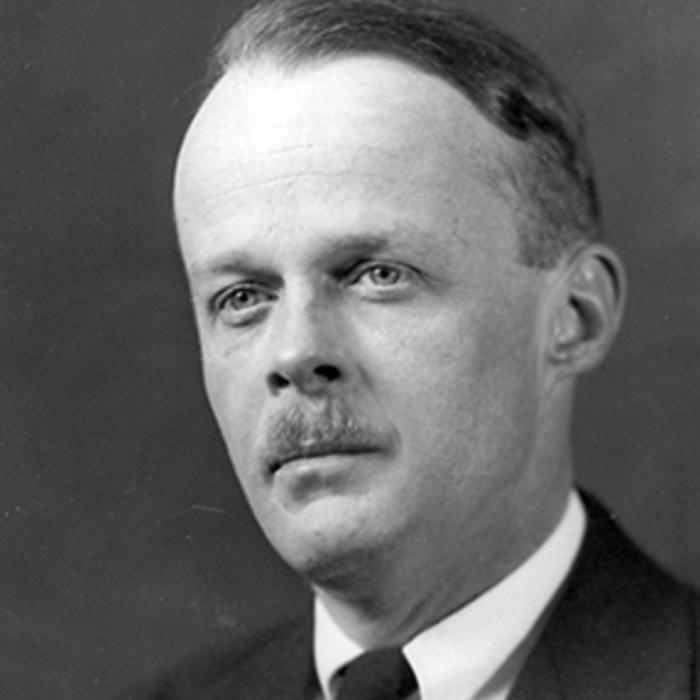
John Crowe Ransom
John Crowe Ransom was born on April 30, 1888, in Pulaski, Tennessee. He received an undergraduate degree from Vanderbilt University in 1909, studied as a Rhodes Scholar at Oxford University, and served in the First World War. He became a professor at Vanderbilt and later accepted a position at Kenyon College, where he became the founder and editor of The Kenyon Review. Crowe Ransom remained at the college until his retirement in 1959. He received a fellowship from the National Endowment for the Arts in 1968.
Crowe Ransom published three slim volumes of highly acclaimed poetry, but after 1927, principally devoted himself to critical writing. He was a guiding member of the Fugitives, a group of writers who were wary of the social and cultural changes they were witnessing in the South during the early part of the twentieth century. The Fugitives sought to preserve a traditional aesthetic ideal which was firmly rooted in classical values and forms. As a critic, he had an enormous influence on an entire generation of poets and fellow academics, who subscribed to the doctrines he laid out as the “New Criticism.” His ideals were derived from John Donne and the English metaphysical poetry of the seventeenth century. He believed in the poetic virtues of irony and complexity, and the importance of adhering to traditional prosodic techniques of meter, stanza, and rhyme. His own poems are marked by irony, a spare classicism, and a concern with the inevitable decay of all things human.
John Crowe Ransom died in Gambier, Ohio, on July 3, 1974.